

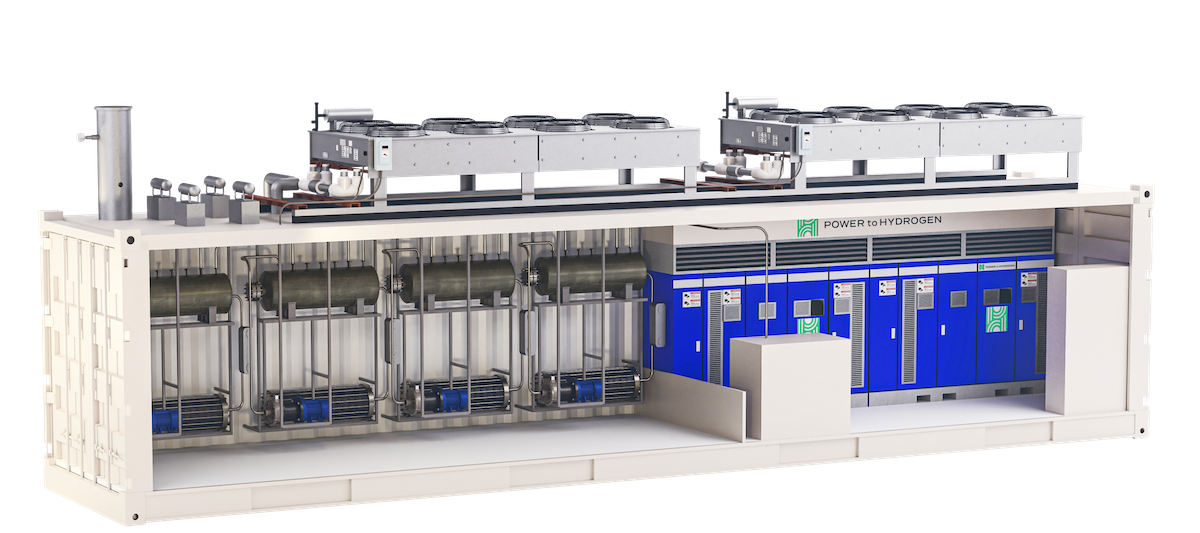
Hybrid electrolysers combine the best features from established electrolysis technologies into a single, integrated system. Power To Hydrogen's advanced hybrid electrolyser systems build on the strengths of PEM, alkaline, and AEM electrolysis approaches without forcing operators to choose between high efficiency and lower material costs.
Our team utilizes this structure to enhance reliability, stabilize long-term performance, and support a broader range of operating conditions. The result is Power To Hydrogen's hybrid AEM system, which produces high-purity hydrogen with greater flexibility for industrial, commercial, and distributed use.
The core electrolysis reactions within hybrid systems are consistent with other methods of electrolysis. However, hybrid systems utilize the best of these technologies by leveraging a complementary structure that improves performance and reduces costs.
Power To Hydrogen’s hybrid electrolysers combine the proton exchange characteristics of PEM electrolysers with the hydroxide transport of AEM systems. This combination creates an environment where oxygen and hydrogen generation can be managed more efficiently. The hybrid design also reduces dependence on platinum-group catalysts, significantly lowering costs.
Hybridization also improves the way systems respond to fluctuating loads. Our customers in renewable-heavy regions rely on electrolysis that can follow power curves without sacrificing stack lifespan and helps stabilize hydrogen production over long cycles.
Membranes determine how ions move through the electrolysis stack. PEM membranes conduct protons under acidic conditions. AEM membranes conduct hydroxide ions under alkaline conditions. When selecting the best hybrid environments, the elements of PEM and AEM systems work together, allowing the stack to operate within lower pressure and temperature ranges.
Catalysts support reaction rates at both electrodes. A hybrid electrolyser can utilize lower-cost catalysts compared to PEM systems, which reduces material costs without compromising reaction efficiency. Our engineering team uses advanced catalyst coatings that maintain strong performance while remaining compatible with the membrane environment on both sides of the cell.
Power To Hydrogen's catalyst and membrane developments continue to move the industry forward through additional testing and advanced research. Our supplier and research partnerships help us maintain consistent quality and establish a supply chain that supports commercial-scale deployments.
Hybridization enables our engineers to design an electrolysis system that operates effectively with variable power inputs from solar, wind, and other renewable energy sources. Many facilities need stable production even when power conditions shift throughout the day. A hybrid system responds to those changes with consistent output. Hybridization also creates a more cost-effective solution, as the materials and components operate under milder conditions than those of a traditional high-pressure PEM stack.
A hybrid electrolyser structure provides operators with dependable performance, paired with a clear cost advantage. Many companies are unsure of their exact long-term hydrogen requirements. A hybrid approach provides them with a reliable platform that adapts to new conditions, upgrade paths, and various usage patterns. Here are several efficiency advantages our customers value:
The primary costs of operating electrolysers include electricity consumption, membranes/catalysts, and replacement parts. A hybrid configuration reduces catalyst costs by replacing precious metals with lower-cost materials such as nickel.
Hybrid systems can also be designed to minimize membrane stress, thereby lowering the frequency of stack replacements. These improvements make hybrid electrolysis more cost-effective for long-term projects, particularly for companies planning multi-megawatt deployments or smaller-scale distributed hydrogen production systems.
Durability affects every part of hydrogen planning. Hybrid electrolysers distribute reaction loads more evenly across components, which reduces hot spots and chemical stress. This structure also helps the system stay stable when customers operate at partial load for extended periods. Our internal testing has shown longer operational intervals between maintenance cycles.
Hybrid electrolysers maintain excellent purity with fewer post-processing steps. The PEM influence on hybrid systems supports low crossover rates. Several industries require hydrogen at 99.999% purity for safe and consistent operation. Hybrid systems reach these levels without expensive downstream purification equipment.
Power To Hydrogen's hybrid AEM electrolysers are designed in a modular system that can scale to match your needs. Large industrial operations can deploy multi-megawatt systems without requiring significant design changes. Smaller facilities (such as distribution hubs, research labs, or local hydrogen stations) can use compact systems tailored to lower volumes.
Power to Hydrogen is at the forefront of hydrogen power. By combining the efficiency of PEM with the affordability of AEM, our electrolysers offer a path forward for reliable hydrogen. Research continues to improve membranes, catalysts, and system designs for hybrid electrolysers. Our engineering and research teams test new materials with support from national labs, universities, and industry partners. These collaborations help us stay at the forefront of emerging chemistries and manufacturing methods.
Our pilot and early commercialization programs are delivering excellent results, demonstrating how hybrid electrolysers perform in real-world environments. Customers report increased efficiency, strong uptime, consistent hydrogen purity, and meaningful reductions in operating costs when compared with traditional technologies. These projects run under different load profiles, environmental conditions, and usage patterns. Each installation gives us valuable field data and demonstrates the advancements that Power To Hydrogen is making with our electrolyser technology.
Power to Hydrogen is committed to advancing hybrid electrolyser technology to improve performance and reduce operating costs for our customers.


