

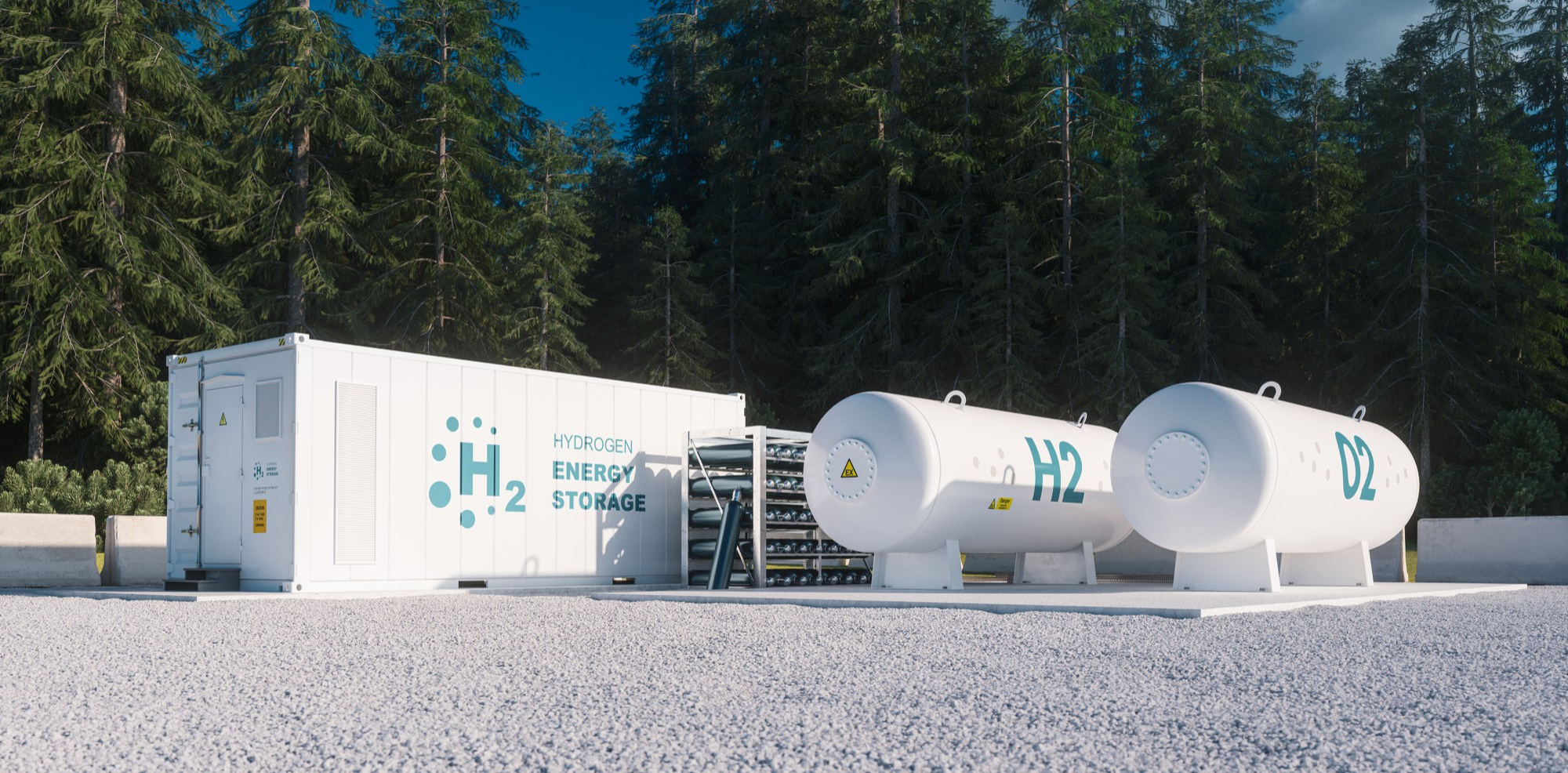
As renewable power generation continues to expand, the need for reliable, long-duration energy storage has become increasingly urgent. Solar and wind power are abundant but intermittent, creating challenges for grid stability, energy security, and industrial operations that require continuous energy input. Hydrogen energy storage has emerged as a critical solution, enabling surplus renewable electricity to be converted into a storable, transportable energy carrier that can be deployed across power, industrial, and mobility sectors.
By converting electricity into hydrogen through water electrolysis, energy can be stored for hours, days, or even entire seasons. Unlike batteries, hydrogen decouples energy storage capacity from power output, allowing storage volumes to scale independently from conversion equipment. This positions hydrogen as a foundational element of future energy storage systems, hydrogen infrastructure, and the broader hydrogen supply chain.
Hydrogen energy storage begins with electrolysis, where electrical energy is used to split water into hydrogen and oxygen. When electrolysers are connected to renewable generation, they can absorb excess electricity during periods of overproduction or low demand, converting otherwise curtailed power into chemical energy.
Once produced, hydrogen can be stored in various physical or chemical forms and later reconverted to electricity via fuel cells or turbines,combusted for high-temperature heat, or used directly as a molecular feedstock in industrial processes. This multi-pathway flexibility allows hydrogen to function simultaneously as long-duration energy storage, an energy vector, and an industrial raw material.
The technical feasibility and economics of hydrogen energy storage are driven largely by the storage method selected. Each approach introduces trade-offs related to pressure, temperature, energy density, materials compatibility, and system efficiency.
Common hydrogen storage methods include:
Each storage pathway introduces system-level considerations related to round-trip efficiency, capital cost, safety, and integration with downstream infrastructure. These trade-offs underscore the importance of matching hydrogen storage technologies to specific use cases and scales.

Scaling hydrogen energy storage requires coordinated development of production, storage, transport, and conversion infrastructure. Electrolysers, compressors, pipelines, storage assets, and end-use equipment must operate as an integrated system rather than isolated components.
Grid-connected electrolysers play a critical role by providing demand-side flexibility, rapidly adjusting hydrogen production in response to renewable availability and electricity pricing. In industrial clusters and ports, colocated hydrogen storage enables continuous operation despite variable power input, improving both asset utilization and system resilience.
Infrastructure planning must also address material compatibility, leakage management, safety codes, and the transition from pilot-scale installations to industrial and gigawatt-scale deployments.
Hydrogen’s ability to store energy without self-discharge makes it uniquely suited for long-duration and seasonal energy storage, where energy generated during periods of surplus must be preserved for weeks or months. Storage capacity can be expanded by increasing storage volume rather than duplicating electrochemical systems, offering a fundamentally different scaling pathway than batteries.
Key advantages of hydrogen energy storage include:
These characteristics make hydrogen especially valuable in energy systems with high renewable penetration and limited alternatives for long-term balancing.
Electrolyser performance directly shapes the efficiency and economics of hydrogen energy storage systems. Factors such as operating pressure, dynamic response, part-load efficiency, and durability under cycling conditions influence how effectively hydrogen can be produced and stored.
Different electrolyser technologies, (alkaline, PEM, AEM, and solid oxide electrolysers) offer distinct advantages depending on application requirements. Increasingly, hybrid approaches are emerging that combine low-cost materials with fast, flexible operation, improving compatibility with renewable-driven hydrogen storage systems.
These developments are enabling tighter integration between hydrogen production, storage, and end use, accelerating the transition from demonstration projects to industrial-scale infrastructure.
A number of high-profile projects are already demonstrating how hydrogen storage and fuel cell systems are being used in real-world energy applications. For example, Microsoft is piloting green hydrogen fuel cells to power data center operations in Dublin, supplying up to 250 kW of clean energy and showcasing hydrogen’s role in backing up critical infrastructure without diesel generators. Similar efforts with Caterpillar, Ballard Power Systems, and Microsoft have successfully demonstrated multi-megawatt hydrogen fuel cell backup power systems capable of meeting stringent uptime requirements, validating the performance and resilience of hydrogen storage paired with fuel cells in demanding environments. These pioneering deployments illustrate how hydrogen can transition from storage medium to reliable clean energy in commercial and industrial contexts.
Hydrogen energy storage is becoming a cornerstone of modern energy systems, enabling deeper renewable integration while supporting industrial decarbonization and energy security. As storage technologies mature and infrastructure expands, hydrogen’s role as a flexible, long-duration energy storage medium will continue to grow.
Advances in electrolyser efficiency, high-pressure operation, system integration, and large-scale storage design will be critical to reducing costs and unlocking gigawatt-scale deployment. For organizations exploring how next-generation electrolysis can support hydrogen storage and infrastructure at scale, emerging AEM-based solutions offer insight into the future direction of industrial hydrogen systems.


