


Sustainable aviation fuel (SAF) can be produced through several different pathways, including the conversion of waste oils and fats through hydroprocessed esters and fatty acids (HEFA), alcohol-to-jet processes and synthetic fuels produced using renewable electricity.
The last of these, commonly called eSAF or power-to-liquid (PtL), uses hydrogen and captured carbon dioxide to produce synthetic aviation fuel. Unlike some other SAF pathways, hydrogen actually serves as one of the main building blocks of the final fuel.
Because of this, electricity and hydrogen production are the major cost drivers for e-SAF. A 2025 study of hydrogen-based aviation fuel reports that electricity costs for renewable hydrogen make up about 70% of eSAF production costs. (EASA – State of the EU SAF Market) Of course, the exact breakdown depends on the production pathway, location, electricity source, and other details of the project.
Because of this, hydrogen production is a very important factor to consider, from the earliest stages of eSAF project development. The price of electricity, the electrolyser’s CapEx, OpEx, and its ability to operate alongside renewable energy all have a significant effect on the fuel’s final cost.
In a typical PtL pathway, electricity powers an electrolyser, which splits water into hydrogen and oxygen. The hydrogen is then combined with captured carbon dioxide to produce synthesis gas (syngas). This gas is then converted into liquid hydrocarbons through processes like Fischer-Tropsch synthesis, in which hydrogen and carbon monoxide react over a catalyst to form longer-chain hydrocarbon molecules.. The resulting synthetic crude is then upgraded through refining processes such as hydrocracking, distillation and fractionation, to produce sustainable aviation fuel..
Other methods of eSAF production use eMethanol as an intermediate before converting it into jet fuel through an alcohol-to-jet process. The precise configuration differs by project, but a reliable supply of hydrogen is also a requirement for this process with eMethanol as the building block.
This consistent need for affordable green hydrogen in eSAF production makes electrolyser selection a very important part of project planning.
Let’s take a step back from eSAF production and look at the production of the hydrogen that makes it possible. Electricity price is the main cost driver for hydrogen production. For example, consider an electrolyser using 50 kWh of electricity per kilogram of hydrogen:
(These estimates focus only on electricity consumption. They don’t include the CapEx and OpEx of the electrolyser itself.)
This simple example highlights why electricity supply strategy matters as much as the electrolyser's efficiency. A highly efficient system using expensive electricity can produce more expensive hydrogen than a less efficient system connected to a much cheaper renewable electricity source.
Developers can purchase hydrogen from an external supplier or produce it on-site using an electrolyser connected to a renewable electricity supply. In a world with hydrogen infrastructure and pipelines that are still in early stages of development,most project developers are looking into on-site production options.
Delivered hydrogen can reduce the amount of equipment a project needs to own and operate, but it introduces more factors that are harder to control (like supply, transportation and delivery). On-site production, though it comes with a higher up-front cost, has the advantage of giving more direct control over hydrogen supply.
There are four main types of water electrolysers: alkaline, proton exchange membrane (PEM), solid oxide (SOEC) and anion exchange membrane (AEM). Each has different characteristics, benefits, drawbacks, and levels of commercial maturity.
For projects designed to operate directly alongside variable wind and solar generation, PEM and AEM are the most practical options because membrane-based systems can respond to changing electricity input (typical of renewables). Alkaline and SOEC systems are better suited to operating environments where power input is more consistent.
Alkaline electrolysis is the longest-established technology (over 100 years old). It typically has lower capital costs and uses inexpensive materials, but struggles to ramp up and down quickly and flexibly, like PEM and AEM.
Solid oxide electrolysis (SOEC) operates at high temperatures, typically around 700–850°C. It has the potential for high electrical efficiency, particularly when integrated with a reliable source of external heat. However, SOEC technology is young, and still in the development stages. It also requires steady operation, since repeated temperature changes can damage, or even destroy, the ceramic components.
Proton exchange membrane electrolysis (PEM) responds quickly to changes in electricity supply, making it well-suited to variable renewable generation. It is also an established commercial technology. One drawback is its use of expensive materials like platinum and iridium, which contribute to a very high system cost and a constrained supply chain.
Anion exchange membrane electrolysis (AEM) combines membrane-based electrolysis with a more basic, alkaline chemistry. This allows manufacturers to use lower-cost materials (including nickel and stainless steel) instead of needing highly acid-resistant precious metals like those used in PEM systems. AEM is also designed for flexible operation with renewables. Although the technology’s scale has previously been limited, AEM is currently moving into industrial commercial deployments.
The use of abundant materials is one of the main reasons AEM technology has the potential to reduce electrolyser costs. PEM systems rely on platinum and iridium in their electrodes, while AEM systems can use materials such as nickel and stainless steel.
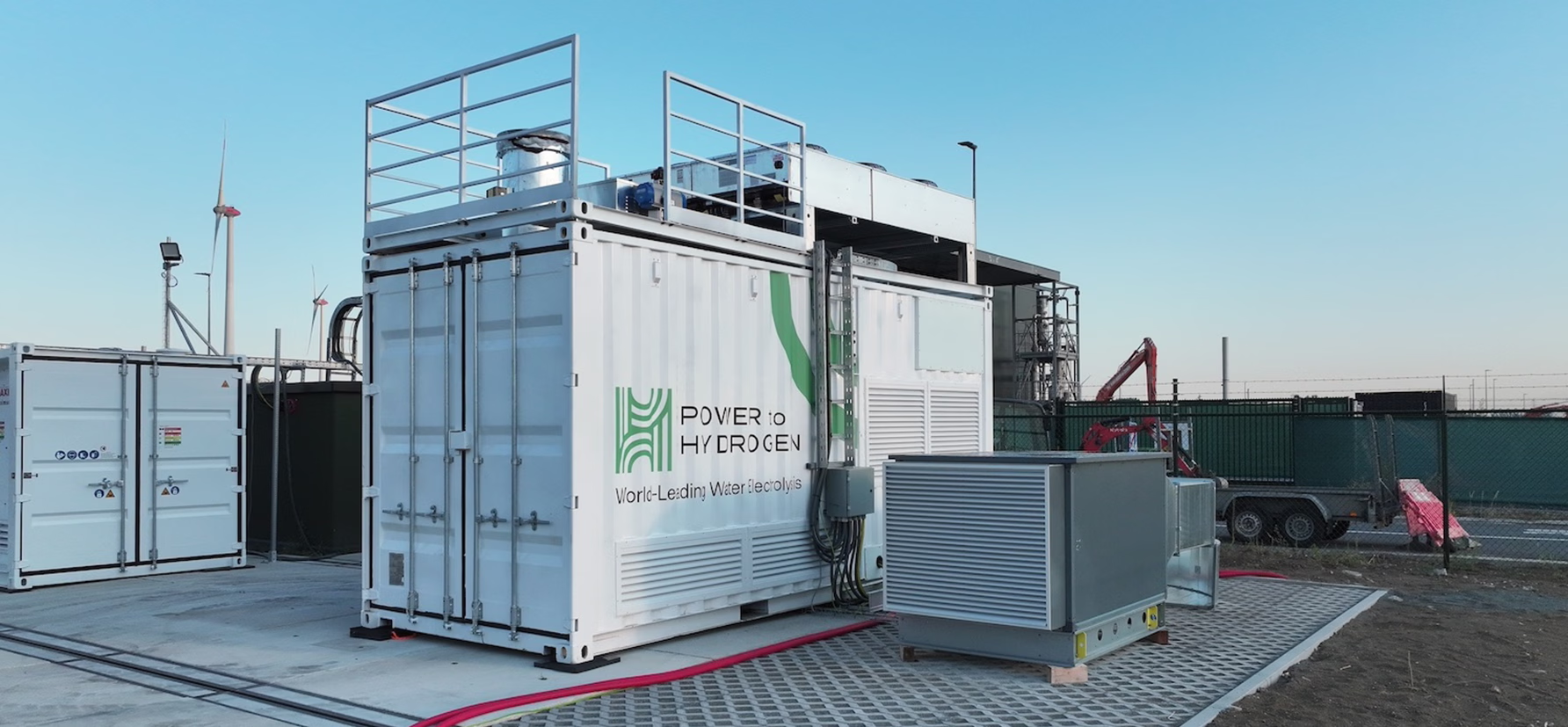
Power to Hydrogen's hybrid AEM electrolyser stacks are designed around this material advantage. By avoiding the expensive precious metals used in PEM systems, P2H2's AEM stacks can be up to 65% more affordable than comparable PEM stacks.
P2H2's modular 250 kW stacks are designed to combine the advantages of alkaline chemistry with the flexible operation strengths of PEM.
Electrolyser selection also needs to account for the requirements of the downstream eSAF process. Some refining and fuel production processes operate around 20–30 bar. If the electrolyser produces hydrogen at a lower pressure, additional compression may be necessary. This not only adds equipment cost but also demands more energy consumption and maintenance needs.
Hydrogen purity is another consideration. Developers need to establish the quality required by the downstream process and confirm that the electrolyser and associated gas treatment equipment can consistently meet that specification.
These requirements should be addressed during the early stages of the engineering process. Choosing an electrolyser based only on electricity needs or up-front cost can create problems later if factors such as hydrogen purity have not been taken into account from the beginning.
For projects targeting the European eSAF market, regulatory compliance is another part of project design.
Under the EU's ReFuelEU Aviation regulation, the minimum share of SAF supplied at covered EU airports is set to increase over time. At the time of this article’s publication, the synthetic aviation fuel sub-mandate is set to begin in 2030. Between 2030-2032, an average of 1.2% minimum share is required. Then it increases to an average of 2% over 2032–2034, with a steep upward trend all the way up to 70% by 2050. (European Commission's ReFuelEU Aviation overview)
Renewable hydrogen must also meet the EU's rules for renewable fuels of non-biological origin (RFNBOs), so there are multiple levels to checking the boxes as SAF projects are developed, especially when deciding to produce hydrogen on-site.
Hydrogen production capacity needs to match the expected output of the eSAF facility. Choosing a modular hydrogen production system is one way to keep the door open for added capacity later on. Choosing a building block like Power to Hydrogen’s 250kW stacks allows for scale-up to 25MW. The basic stack architecture can be repeated to reach the production goal and keep expanding as demand grows.
Hydrogen is a major cost driver in eSAF production, making electrolyser selection a very important part of the project development process.
The most affordable option overall is not always the system with the highest efficiency or the lowest up-front cost. Developers need to take into account all the factors of electricity cost, access to renewable assets, electrolyser lifespan, CapEx, operating requirements, and ease of integration with the downstream fuel process.
Matching the electrolyser to the available electricity supply and the requirements of the fuel production process from the beginning can help avoid unnecessary expenses and create a more practical route to commercial-scale eSAF production.


